
On January 22, 2021, the Shanghai Container Freight Index (SCFI) showed that the composite index fell 16.05 points to 2868.95 points for the first time in three months, a decrease of 0.6% from the previous week.
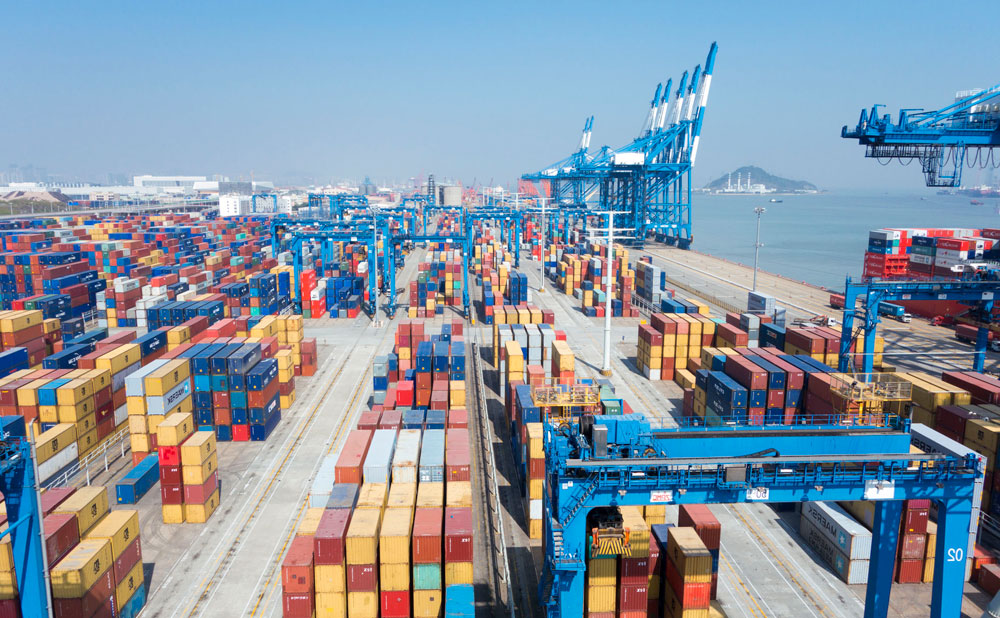
In general, China’s export container shipping market was generally stable this week, with transportation demand remaining at a relatively high level. The ocean freight rate dropped after a continuous surge. The composite index fell slightly, but remained at a relatively high level.
European routes:
On January 22, the freight rate (sea freight and ocean freight surcharges) for exports from Shanghai to the European basic port market was 4394 US dollars/TEU, down 0.4% from the previous period.
Mediterranean routes:
On January 22, the freight rate (sea freight and ocean freight surcharge) for exports from Shanghai to the Mediterranean basic port market was 4296 US dollars/TEU, which was the same as the previous period.
North American routes:
On January 22, the freight rates (sea freight and ocean freight surcharges) of Shanghai exports to the basic ports of the West and East US markets were 3,995 USD/FEU and 4,750 USD/FEU, respectively, down 1.5% and 1.0% from the previous period.
South American routes:
On January 22, the freight rate (sea freight and ocean freight surcharge) for exports from Shanghai to the basic port market in South America was US$8,870/TEU, down 0.4% from the previous period.
Persian Gulf route:
On January 22, the freight rate (sea freight and ocean freight surcharge) for exports from Shanghai to the basic port of the Persian Gulf was US$1934/TEU, down 2.4% from the previous period.
Australia and New Zealand routes:
On January 22, the freight rate (sea freight and ocean freight surcharge) for exports from Shanghai to the ANZ basic port market was US$2,406/TEU, the same as the previous period.
Japan route:
The market freight rate dropped slightly. On January 22, the freight index of the route from China to Japan was 837.75 points.
According to data from the Shanghai Shipping Exchange's weekly report, on January 22, the average loading rate of ships in Shanghai Port on European and Mediterranean routes remained above 95%, and some flights were shipped with full load; the average loading rate of ships in Shanghai Port on US West and East US routes was close to full load. Level.
According to Alphaliner's data, since June 2020, more than 2.2 million TEUs of idle capacity have resumed operations, and more than 600,000 TEUs of new ships have been delivered, increasing effective supply; in 2021, more than 1.1 million new ships will still be delivered. The above-mentioned investment of nearly 4 million capacity will gradually ease the pressure.
As of the end of December 2020, the weekly capacity of the trans-Pacific route market has approached 530,000 TEU, an increase of about 25.6% year-on-year, and has reached a historical peak. Not only the trans-Pacific route, but the capacity of other routes is also accelerating recovery to supply the demand market.

2021.07.26
The Ukrainian Iron and Steel Manufacturers Association …

2021.07.23
According to statistics from the General Administration…
2021.06.15
The World Steel Association’s recently released “World …

2021.06.15
China’s steel imports and exports in 2020: From January…
